

Is SA workplace culture making you ill? Survey finds it’s not to be sneezed at
A new survey found that South African professionals are more susceptible to illness, especially during periods like flu season, raising concerns about the role of workplace culture in contributing to poor health habits amongst employees.

Image credit: www.kaboompics.com on Pexels
The survey, conducted by Profmed, suggests that many professionals are already heading into winter physically and mentally depleted, a combination that may be making them more vulnerable to illness.
Growing disconnect
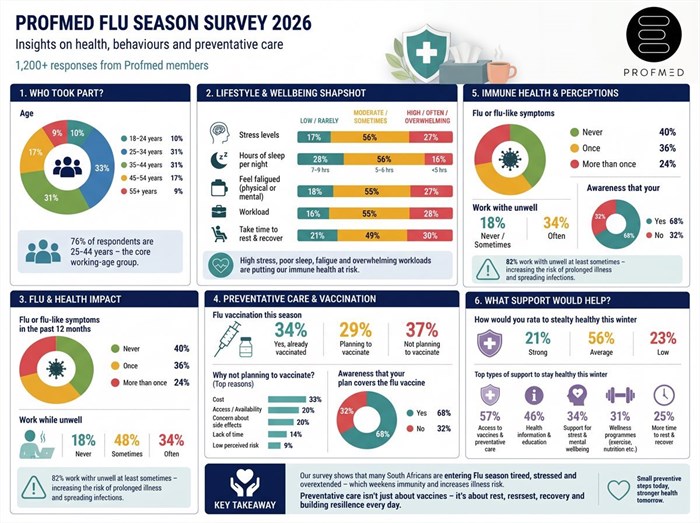
Based on responses from more than 1,200 individuals, the survey points to widespread stress, ongoing fatigue, and poor sleep among working professionals.
Many also admit to continuing to work while experiencing flu-like symptoms.
The survey makes it clear: flu season is shaped by more than just viruses—workplace culture and daily habits are key contributors.
“There is a growing disconnect between how people perceive their health and how they’re actually supporting it day to day,” says Justine Lacy, clinical executive at Profmed.
“Many professionals are entering flu season already physically and mentally depleted, which reduces their ability to recover and increases their vulnerability to illness.”
No rest for the hardworking
The survey reflects a pattern of sustained pressure in the workplace.
Many respondents reported moderate to high stress levels, while a significant portion said they regularly get fewer than six hours of sleep a night.
Feelings of exhaustion were consistent, with people describing both physical and mental fatigue as part of their daily routine.
Even so, workloads remain demanding, and rest is often pushed aside.
Some respondents said they continue working while sick, a habit that can delay recovery and increase the risk of spreading illness in shared spaces.
“This culture of pushing through, even when unwell, has become normalised,” Lacy says.
“But recovery is not a luxury; it is a critical part of maintaining health and resilience.”
Noticeable gap
While most respondents said they understand flu as a health risk and take some preventive steps, there’s a noticeable gap between awareness and what people consistently do in practice.
Healthy eating, exercise and supplementation are fairly common but not always sustained.
Vaccination uptake also varies, with some pointing to concerns about side effects, lack of time, or simply not feeling at risk.
There are also indications that some people may not be making full use of their medical aid benefits, including flu vaccines that are available but not always taken up.
“Prevention is not just about what you do when flu season arrives,” says Lacy.
“It’s about how you manage stress, sleep and recovery long before you get sick.”

Supporting employee health
The findings also raise a bigger question about the role employers play in supporting employee health.
Presenteeism, working while sick, remains common, and many employees still feel pressure to push through illness.
For many professionals, slowing down is not always easy, even when their health is telling them to.
As flu season intensifies, the message is clear: protecting your health starts well before symptoms appear.
And increasingly, it may depend just as much on workplace culture as it does on individual behaviour.